

The Singapore government continues to prioritize household welfare through the Community Development Council voucher initiative. As living costs evolve, these digital credits serve as a vital resource for families across the nation. By providing direct financial relief, the program ensures that residents can manage their daily expenses while simultaneously invigorating the local business ecosystem. This dual purpose makes the scheme a cornerstone of national social support, reaching thousands of homes in every heartland district.
How the CDC Voucher System Functions in 2026
At its core, the program is a digital grant designed to offset the price of essential goods. Every eligible household receives a specific allocation of credits that are accessed through a secure online portal. These credits are split into two distinct categories to ensure a balanced distribution of spending. One portion is reserved for smaller neighborhood merchants and hawkers, while the remaining half is designated for use at major supermarket chains. This structure ensures that both large retailers and small family-run stalls benefit from the government expenditure.
Eligibility Requirements for Singaporean Households
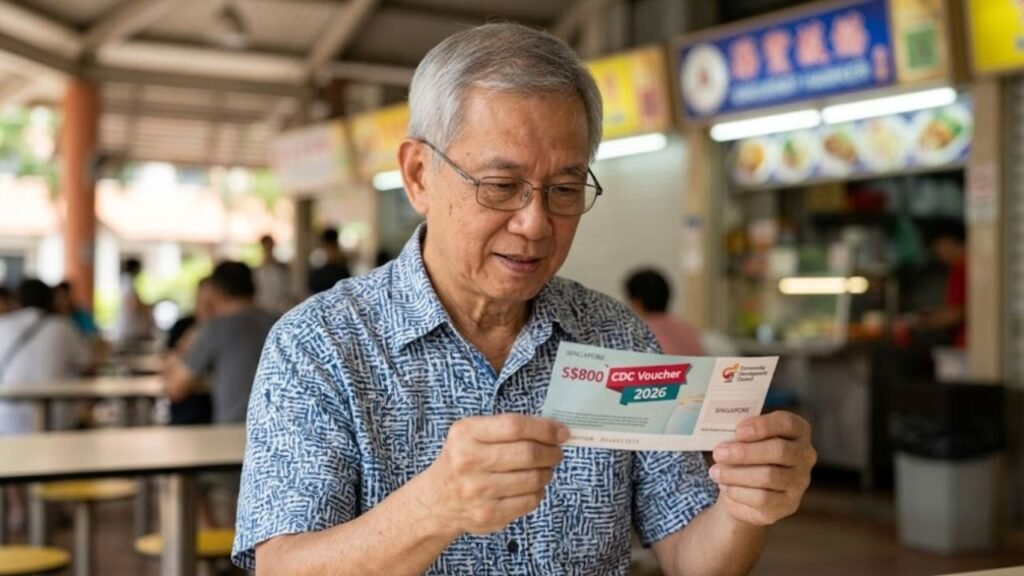
To qualify for the 2026 disbursement, a household must meet specific criteria centered on citizenship and residency. The process is designed to be inclusive, ensuring that the vast majority of local families can access their credits without undergoing complex financial assessments.
- The household must include at least one Singapore citizen.
- Only one member per address is required to claim the total amount on behalf of the family.
- A valid Singpass account is necessary for identity verification during the digital claim process.
- The vouchers must be used within the specified calendar year before they reach their expiration date.
A Detailed Breakdown of the 2026 Voucher Allocation
Understanding how the funds are divided helps residents plan their monthly budgets more effectively. The 2026 package maintains a focus on supporting diverse sectors of the local economy.
| Category of Information | Details for the 2026 Cycle |
| Total Voucher Value | S$300 per Household |
| Disbursement Date | January 2026 |
| Heartland Merchant Share | S$150 in Digital Credits |
| Supermarket Merchant Share | S$150 in Digital Credits |
| Participating Outlets | Hawkers, Local Shops, and Major Supermarkets |
| Platform for Claiming | Official CDC Voucher Website via Singpass |
Simple Steps to Claim Your Digital Credits
The redemption process has been streamlined to accommodate users of all technical skill levels. To begin, one representative from the household visits the official government voucher portal. After logging in with Singpass, a unique link is sent via SMS to the registered mobile number. This link contains the digital vouchers, which can then be shared with other family members living at the same address. When making a purchase, the user simply presents the relevant QR code to the merchant, who scans it to deduct the amount from the total bill.
Impact on Heartland Merchants and Local Hawkers
Beyond individual household relief, the 2026 voucher scheme acts as a powerful economic engine for small businesses. Local hawkers and heartland shops often face stiff competition from online retailers and large malls. By earmarking S$150 specifically for these smaller vendors, the government directs significant foot traffic back into community centers. This support helps maintain the vibrant culture of Singaporean wet markets and hawker centers, ensuring that traditional trades remain viable in a modern economy.
Maximizing the Value of Your Government Support
To get the most out of the S$300 allocation, residents are encouraged to track their spending through the digital interface. The portal provides real-time updates on the remaining balance, preventing any confusion at the checkout counter. It is also wise to look for merchants who offer additional discounts or promotions for customers using CDC vouchers. Since these credits are as good as cash at participating locations, integrating them into a weekly grocery run or daily meal plan can result in substantial yearly savings for the average family.